
The 4Cs of a Diamond
CLARITY
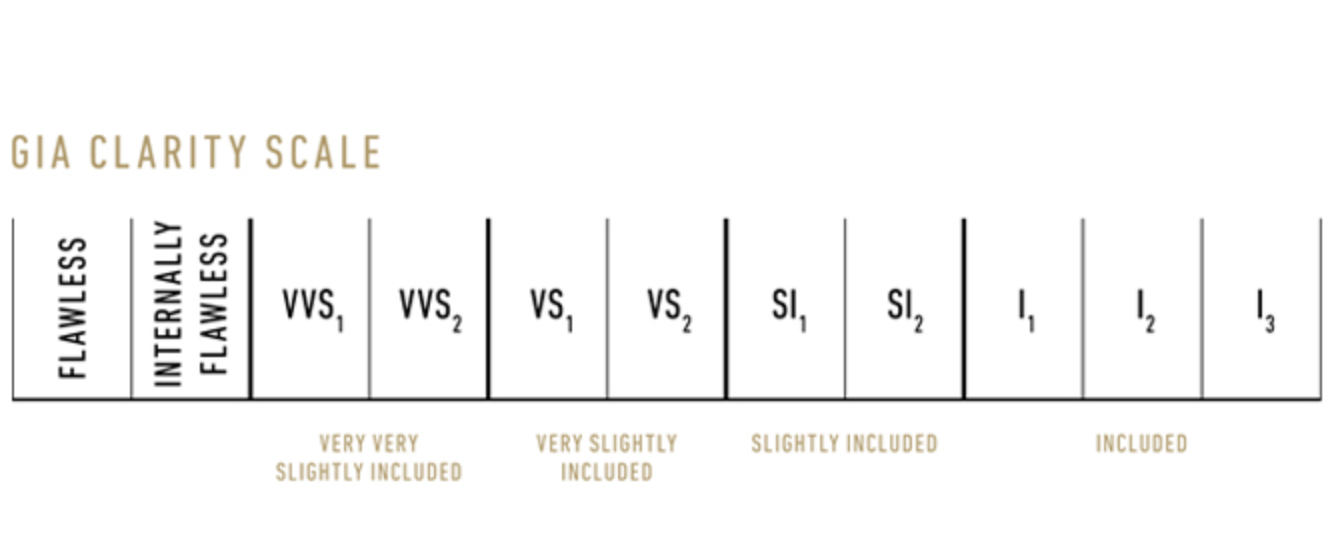
The clarity grade assesses the number, size and position of inclusions and blemishes. The scale starts at FL, which stands for flawless, and ends at I3, meaning ‘included 3’. This is the most included a jewellery-quality diamond can be. The size of a diamond greatly affects how important the clarity is; a larger stone will need a higher clarity than a small stone, as the inclusions will be more visible.
COLOUR
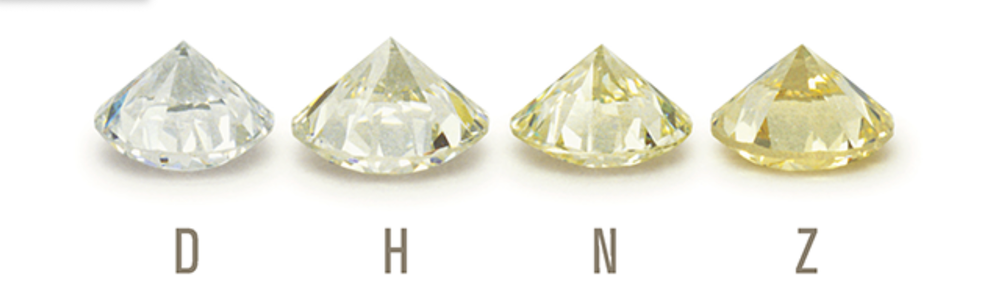
The less colour, the higher the grade. Even the slightest hint of colour can make a dramatic difference in value. The scale starts all the way down at ‘Z’, although we rarely see below a ‘K’. A diamond below a K will show heavy grey, yellow, or brown colours. The highest colour is a D, meaning an absolute lack of colour in the diamond. Just like clarity, the size of the diamond matters when considering its colour.
CARAT WEIGHT
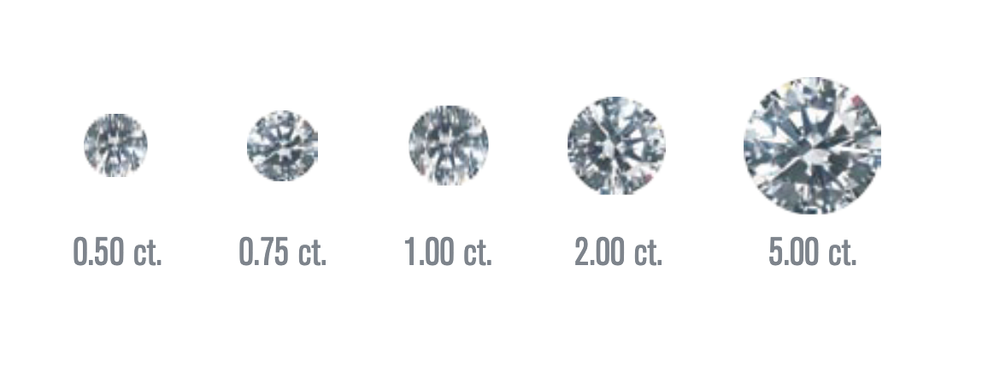
The carat is not only a measure of weight, but also of rarity. This means larger diamonds of the same quality are worth more per carat. Rarity goes up exponentially, meaning a 2-carat diamond is not twice as rare as a 1-carat diamond, but as much as 10 times rarer.
CUT
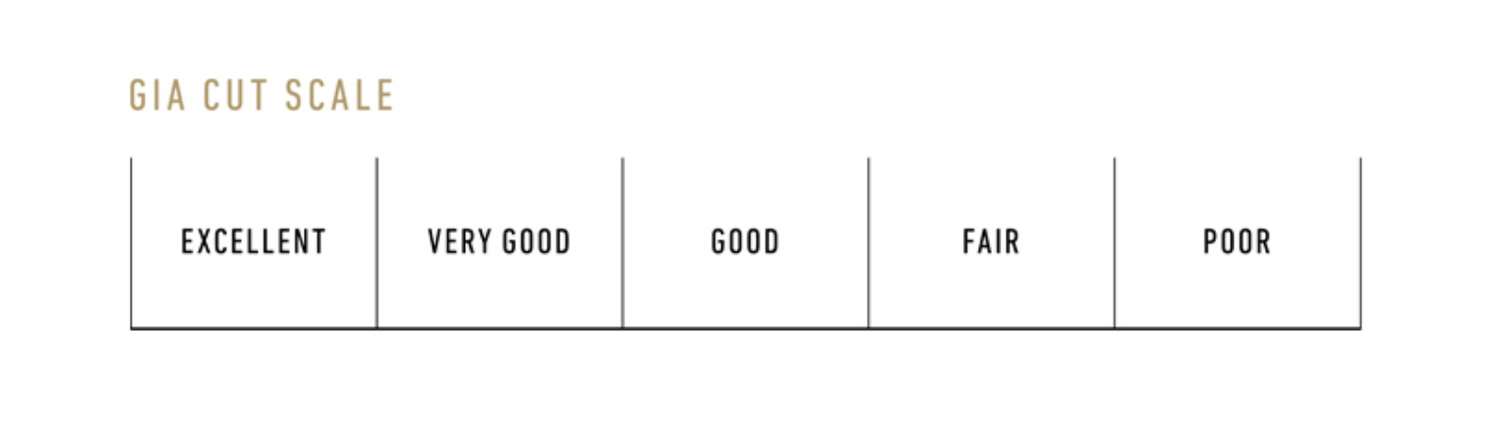
The cut does not actually refer to the shape of the diamond, but how its facets interact with light. This is determined by proportions, symmetry, and polish. Two diamonds of the same clarity, colour, and carat could have slightly different proportions or symmetry in the cut and thus sparkle very differently.
